

Then and Now: 6 Generations of GeForce Graphics Compared > Charted: 6 Years of GeForce Graphics
Charted: half dozen Years of GeForce Graphics
For the nigh part we've seen steady and consistent improvement in GPU operation. Some of the biggest gains were seen between 2022 and 2022 when moving from the 40nm GTX 580 to the 28nm GTX 680. The 780 also offered decent gains as Nvidia squeezed what they could out of the 28nm process and the Kepler compages.
After that it wasn't until the hugely complex 980 Ti came along that nosotros saw some sizable gains, at to the lowest degree when looking at 1600p performance. The line graph below plots Nvidia's progress over the by 6 years.
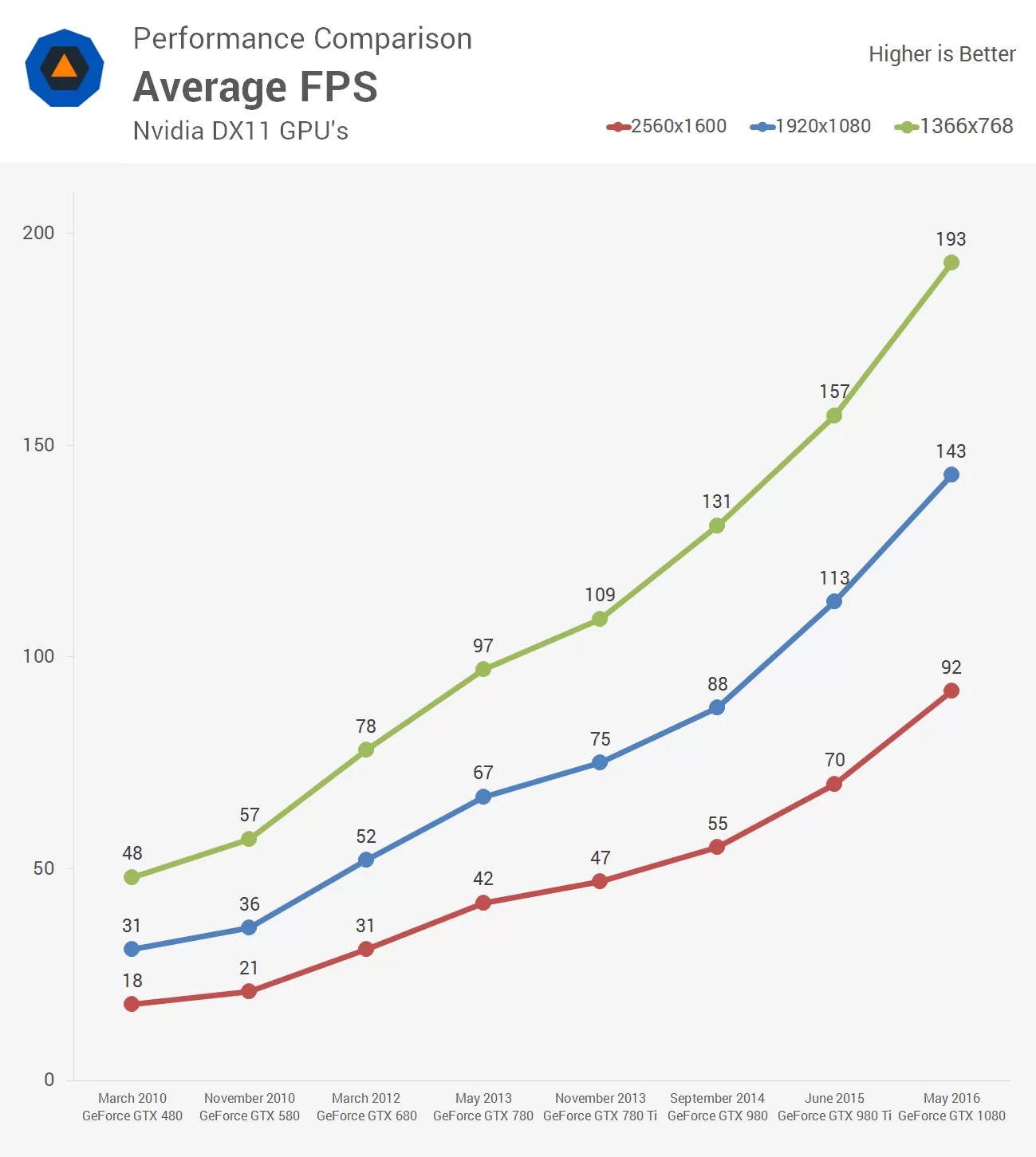
With the inflow of the GeForce GTX 1080 we saw another big step forward, partly thanks to a much needed die compress that has allowed Nvidia to take their already efficient Maxwell architecture and supercharge it. Despite 9% fewer CUDA cores, the minor tweaks fabricated to the Pascal compages along with the enhanced core clock speed meant the GTX 1080 was on boilerplate 31% faster at 2560x1600 than its 980 Ti predecessor.
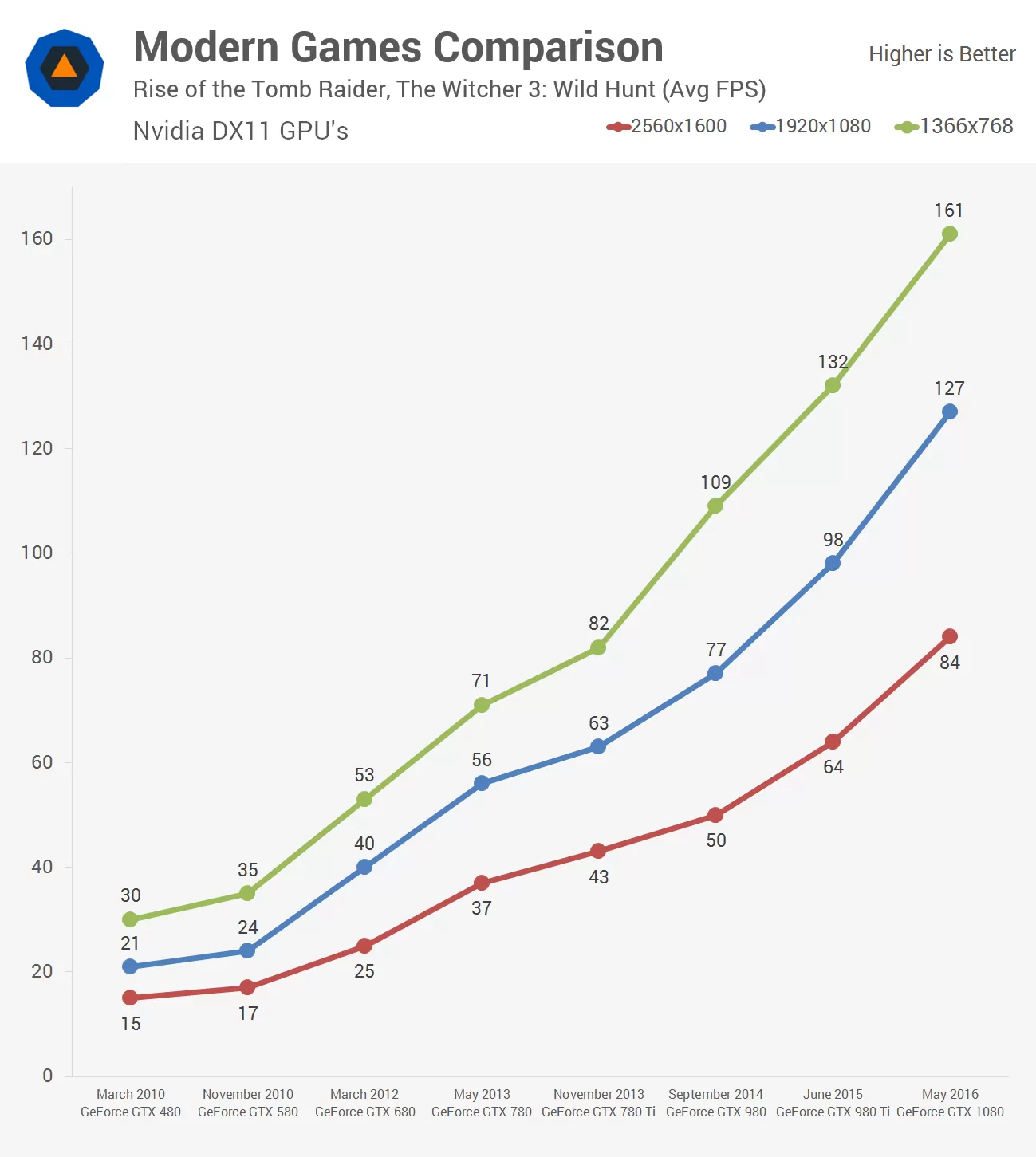
Looking at two popular titles such as The Witcher 3 and Rising of the Tomb Raider nosotros even so detect similar margins for the nearly part. The GTX 1080 was 31% faster than the GTX 980 Ti here. Even if you lot practise consider the maximum overclocking performance of the GTX 980 Ti and GTX 1080, the Pascal graphics carte nonetheless comes out on meridian at effectually 20% faster while consuming considerably less power.
No doubt the future holds more complex and larger Pascal GPUs with 4K gaming and VR pushing for more than performance in the coming years. Equally usual, it'due south been interesting to expect back and see how far things take come up in the world of computer graphics.

Source: https://www.techspot.com/article/1191-nvidia-geforce-six-generations-tested/page6.html
Posted by: knudsensomay1954.blogspot.com
0 Response to "Then and Now: 6 Generations of GeForce Graphics Compared > Charted: 6 Years of GeForce Graphics"
Post a Comment